
Etsy AI Generated Image Policy 2026: Rules & Specs
Selling on Etsy in 2026 requires navigating a marketplace that demands absolute transparency for every pixel generated by an algorithm. Failing to disclose AI usage can trigger “Item Not As Described” cases or lead to permanent shop suspension under the latest Creativity Standards.
As of 2026, Etsy allows AI-generated images and products, provided sellers disclose AI usage in the listing description. AI prompt bundles are banned, and main listing photos must accurately represent the physical item.
Quick Reference Table

Related: TikTok Shop Symphony Avatar Lighting Mismatch Fix (2026) · TikTok Shop Image Style Inconsistency Rejection Fix · Google Merchant Center AI Image Metadata Requirements 2026
Audit your current shop inventory against these technical and policy thresholds to ensure your listings remain active and visible in Etsy Search.
| Requirement | Specification / Policy | Official Source |
|---|---|---|
| Minimum Image Size | 2000 pixels on the shortest side | Etsy Help Center |
| Maximum File Size | the current limit | Etsy Help Center |
| Supported Formats | JPEG, PNG, GIF | Etsy Help Center |
| AI Disclosure | Mandatory in listing description | Creativity Standards |
| AI Prompt Bundles | Strictly Prohibited | Etsy Community |
| Main Listing Photo | Must show the actual finished product | Seller Policy |
| Recommended Ratio | 4:3 Aspect Ratio | Etsy Help Center |
Detailed Requirements
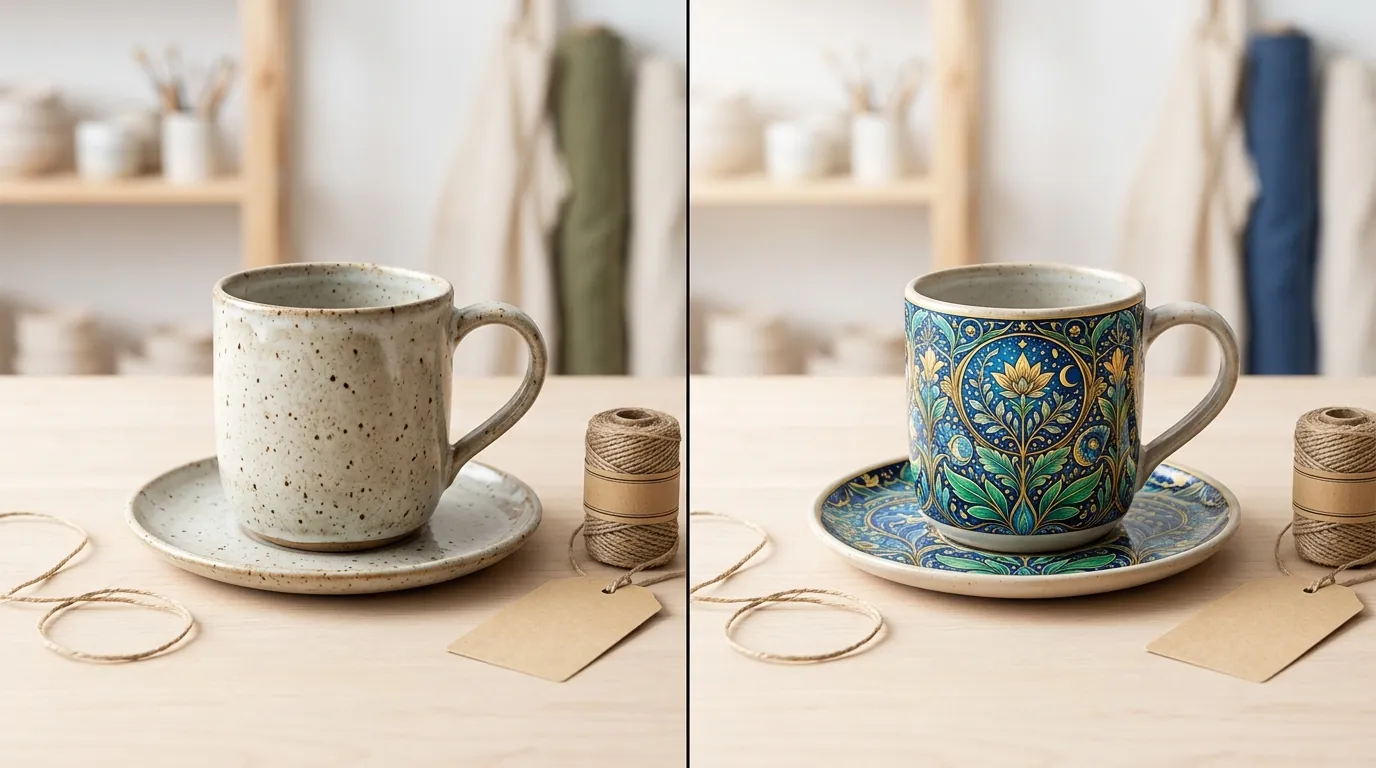
Update your listing descriptions immediately if you utilize generative AI for product design or lifestyle photography. Etsy’s 2026 enforcement focuses on the distinction between “Seller-Designed” and “AI-Generated” content, requiring a human-in-the-loop for every listing.
Creativity Standards Updates
Etsy’s Creativity Standards categorize items into four buckets: Made by a seller, Designed by a seller, Sourced by a seller, or Handpicked by a seller. AI-generated products fall under “Designed by a seller.” To qualify, you must be the one providing the creative input (the prompts and iterative edits).
The 2026 enforcement clarifies that simply selling a raw output from a generator without significant human intervention or physical manifestation (like a print or a physical craft) may lead to a “Low-Quality/Spam” flag. If you use AI to create digital art, you must disclose this in the listing description. A standard disclosure phrase like “This artwork was created with the assistance of generative AI and refined by the seller” is typically sufficient to satisfy the transparency requirement.
AI Models and Mockup Rules
For multi-platform sellers who batch-generate AI product images, the primary listing photo remains the most scrutinized asset. Etsy requires that your first image accurately represents the item the buyer will receive.
- The Physical Product Rule: If you sell physical goods (like apparel or home decor), your primary photo should ideally be a photograph of the physical item. While AI-generated lifestyle backgrounds are permitted, the core product—its texture, color, and scale—must remain 100% accurate to the physical inventory.
- Synthetic Performers: 2026 transparency trends emphasize the disclosure of “synthetic media.” If you use AI-generated human models to showcase your products, Etsy’s policy on misleading listings suggests ensuring these models do not misrepresent the fit or scale of the item.
- Mockup Limitations: You cannot use a blank mockup (like a white t-shirt with a digital overlay) as your only image if the final product has significant textural differences. Always include at least one “real-world” photo to prevent buyers from claiming the item is not as described.
Common Rejection Reasons
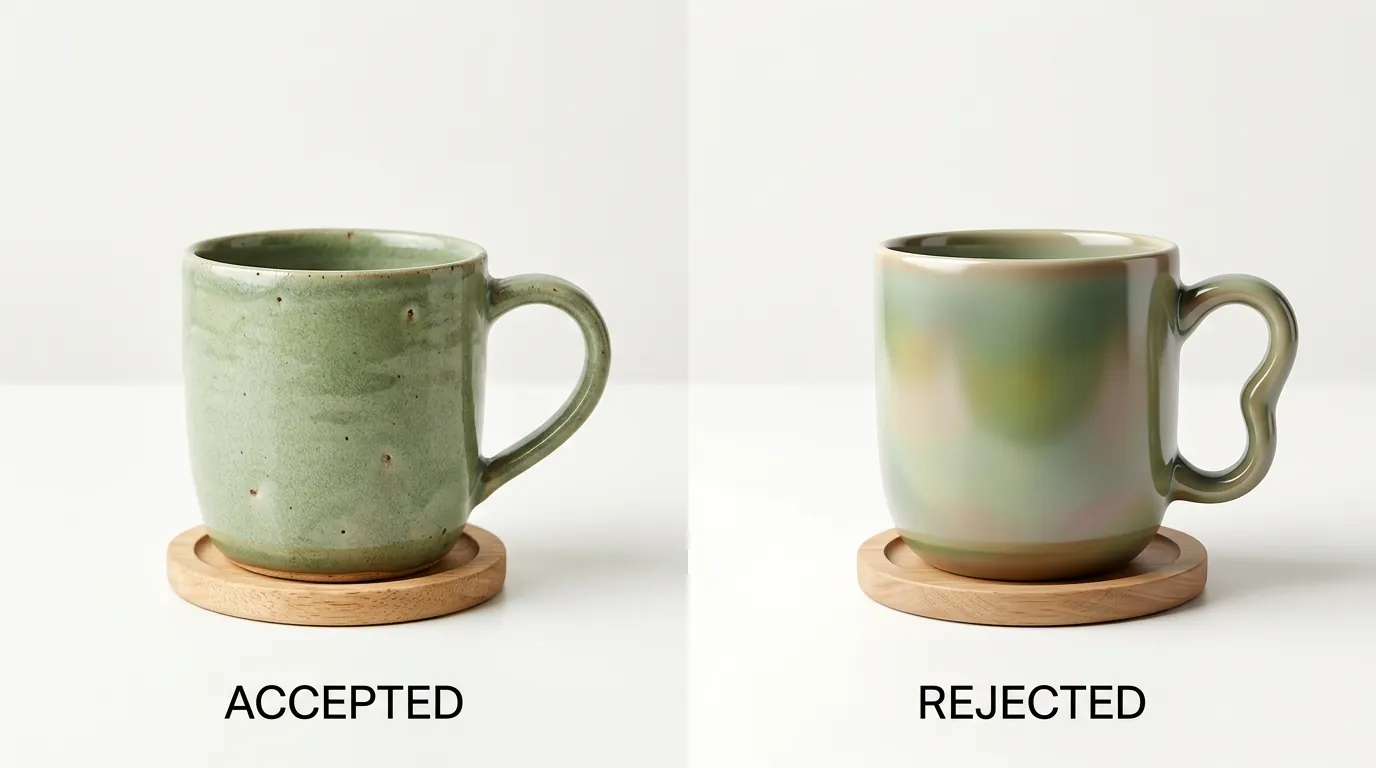
💡 Skip the manual editing. PixelMatch batch-generates ecommerce-ready product images in 60 seconds — white background, lifestyle scenes, and variant mockups from a single source photo. Try PixelMatch free →
Identify these high-risk areas in your shop to prevent automated listing deactivations or permanent account shadow-banning.
Missing AI Disclosures
The most frequent violation is omitting the AI disclosure for digital downloads or AI-assisted art. Etsy’s search algorithm and Trust & Safety team use automated tools to detect common AI artifacts. If a listing is flagged as AI-generated but lacks the mandatory disclosure, the listing may be suppressed in search results or removed entirely.
Selling Prohibited AI Assets
Etsy has taken a hard stance against “low-effort” AI products. Specifically, the sale of AI prompt bundles is prohibited. Sellers attempting to sell “Midjourney Prompt Packs” or “DALL-E 3 Guidebooks” often find their shops closed within 48 hours. However, selling a physical book or a curated PDF guide that teaches a broader skill (which happens to include AI tips) is generally permitted, provided the core value isn’t just a list of copy-paste prompts.
Scale and Texture Misrepresentation
Using AI to generate “lifestyle” scenes can lead to rejection if the background makes the product look larger or smaller than its actual dimensions. For example, placing an AI-generated 8x10 print in a massive, high-ceilinged digital living room can be seen as deceptive. Ensure your 2000-pixel images use backgrounds that maintain realistic proportions.
Low Resolution and Blurry Thumbnails
Etsy’s CDN (Content Delivery Network) aggressively compresses images for mobile users. If you upload an image smaller than the recommended 2000 pixels, the resulting thumbnail will often appear blurry or pixelated. This doesn’t just look unprofessional; it can trigger quality flags that lower your shop’s overall “Quality Score” in the Etsy algorithm.
How to Fix Each Issue

Execute these steps to bring your shop into full compliance with 2026 standards while maintaining a high conversion rate.
Step 1: Standardize Your AI Disclosures
Audit your listing descriptions for any item that used generative AI during the design phase. Add a “Process Disclosure” section at the bottom of your description.
- Action: Insert the following text: “This product was designed with the assistance of [Tool Name] and finalized by our shop. We maintain creative control over the prompts and final aesthetic to ensure a unique product for our customers.”
Step 2: Update Your Primary Photos
If your shop relies heavily on mockups, replace the primary image (the first slot) with a high-resolution photo of the physical product.
- Action: Use a 4:3 aspect ratio. While tools like Photoroom offer a Pro tier at $12.99/mo for manual background removal, or Canva Pro at $120/year for design work, PixelMatch is better suited for multi-platform sellers who need to batch-process hundreds of images. PixelMatch generates compliant lifestyle backgrounds that keep your product’s dimensions and colors intact, preventing “Item Not As Described” disputes.
Step 3: Technical Spec Calibration
Export all your assets to meet Etsy’s specific 2026 requirements.
- Action: Set your export settings to 2000 pixels on the shortest side. Ensure your file size is under the current limit. If your file is too large, use a tool like Adobe Express (which has a free tier) to compress the image without losing significant detail.
Step 4: Label Synthetic Media
If you use AI-generated models for your apparel or jewelry shop, add a small, unobtrusive text overlay or a disclosure in the “About” section.
- Action: Add a line in the image caption or description: “Model images are digitally generated to showcase fit and style.” This preemptively satisfies emerging consumer protection laws regarding synthetic media.
Official Source Links

Bookmark these official resources to stay updated on policy shifts that occur throughout the year.
| Source Name | URL | Purpose |
|---|---|---|
| Etsy Creativity Standards | etsy.com/legal/policy/creativity-standards | Core AI disclosure rules |
| Etsy Image Requirements | help.etsy.com/…/115015663347 | Pixel specs and file sizes |
| Etsy Seller Policy | etsy.com/legal/sellers | General shop conduct |
| Etsy Prohibited Items | etsy.com/legal/prohibited-items | Rules on prompt bundles |
Frequently Asked Questions
Can I use AI-generated backgrounds for my Etsy product photos?
Yes, you can use AI-generated backgrounds, but the actual product must be a real representation of what the customer will receive. Etsy’s Creativity Standards require transparency, so if the entire scene is AI-generated, it is best practice to mention that lifestyle images are mockups.
Do I have to disclose if I used AI to edit a photo (e.g., background removal)?
Standard photo editing, such as removing a background, color correction, or cropping, does not typically require an AI disclosure. The disclosure requirement is specifically for items where the design itself was created using AI or where the image contains significant synthetic elements (like AI models).
Is there a penalty for not disclosing AI use on Etsy?
Yes, failing to disclose AI usage can lead to listing removal or shop suspension. Etsy’s automated systems are designed to detect AI-generated content; listings that lack the required disclosure are often flagged for manual review by the Trust & Safety team.
Can I sell AI-generated digital art on Etsy in 2026?
Yes, you can sell AI-generated digital art as long as you disclose the use of AI in the listing and have had a significant creative role in its production. You cannot sell raw AI outputs that you did not prompt or refine, as these do not meet the “Designed by” criteria.
Ready to scale your listings?
PixelMatch generates white-background, lifestyle, and variant mockups from a single source photo — built specifically for multi-platform ecommerce sellers. 50 free images on signup, no credit card.
Start free →
Sources
- Etsy Creativity Standards Policy
- Etsy Help Center: Requirements and Best Practices for Images
- Etsy Seller Policy
- Etsy Community: Announcement on AI Creations
- Photoroom Pricing
- Canva Pricing
- Adobe Express Pricing