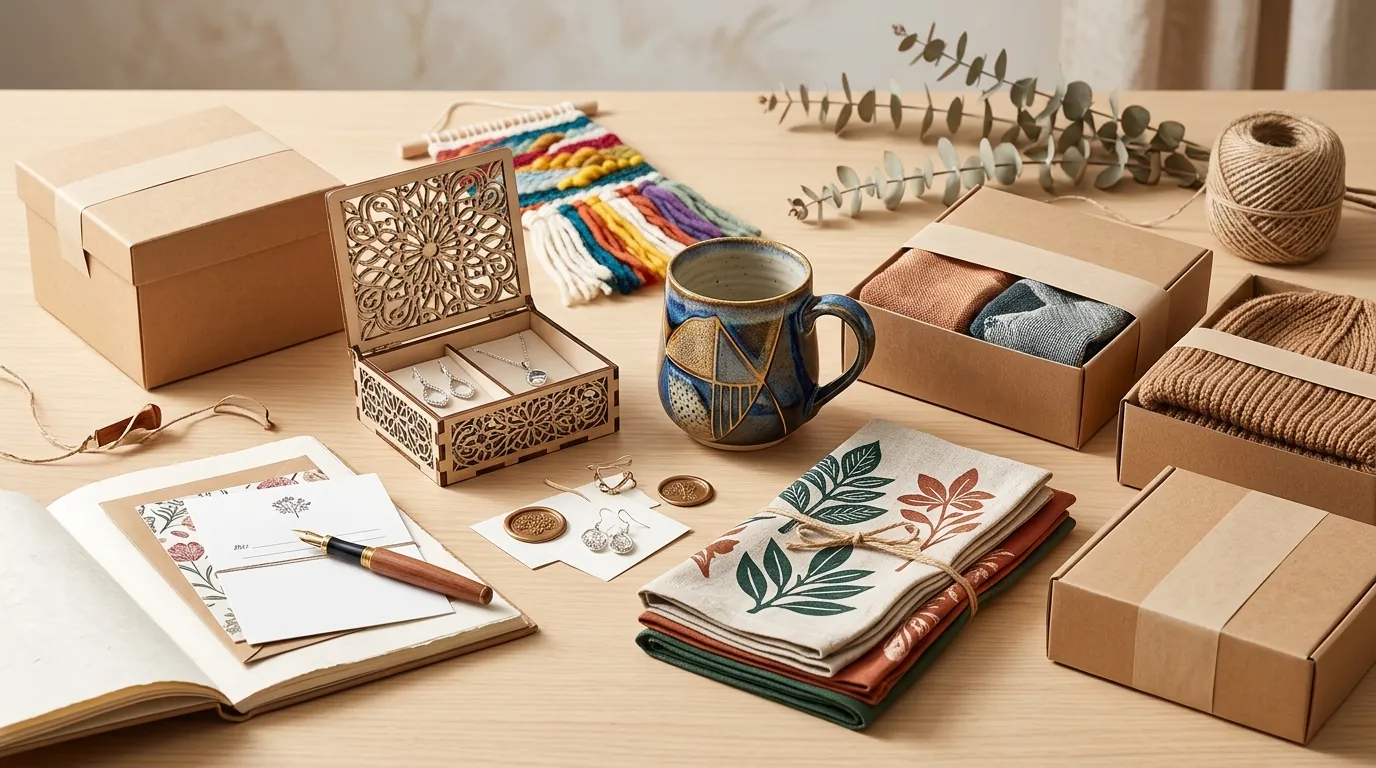
Etsy Creativity Standards for AI Images: 2026 Policy Guide
Stop guessing which AI-generated images will get your Etsy shop suspended and start auditing your listings against the 2026 disclosure mandates. Failing to distinguish between a “synthetic performer” and a real human model or mislabeling an AI-generated print as “Photography” can now trigger automated listing takedowns and permanent shop closures.
Quick Answer: Under Etsy’s Creativity Standards, AI-generated artwork must be categorized as “Designed by a seller” and explicitly disclosed in the listing description. Additionally, a June 2026 law requires sellers using AI-generated human models in mockups to add a visible disclosure badge, and AI prompt bundles are strictly prohibited.
Quick Reference Table
Related: Amazon AI Image Disclosure Penalty 2026: Policy & Fixes · Etsy AI Search Visibility Penalty 2026: Seller Guide · Etsy 2026 Search Update: Image Quality Standards Guide
Run a manual audit of your top 10 best-selling listings today to ensure your hero image is a photograph of a physical item, not a computer-generated mockup. Etsy’s automated scanners are increasingly sensitive to metadata and visual patterns that suggest a primary image is not a real photo.
| Feature | Allowed | Prohibited |
|---|---|---|
| AI Art/Digital Prints | Yes, if disclosed as “Designed by Seller.” | No, if listed as “Photography” or undisclosed. |
| Product Backgrounds | Yes, using tools like PixelMatch for real products. | No, if the product itself is AI-generated/altered. |
| Listing Hero Image | Must be a photo of the finished, physical item. | No AI-generated mockups as the first image. |
| AI Human Models | Yes, with mandatory “AI Model Used” badge. | No undisclosed “synthetic performers.” |
| Digital Assets | Finished AI-generated artwork and textures. | AI Prompt Bundles (e.g., Midjourney prompts). |
| Production Partners | Must list AI software as a production partner. | Claiming AI work is “Handmade by me” without help. |
Detailed Requirements

Update your listing “About this listing” section to reflect that your AI-assisted work is “Designed by a seller” rather than “Handmade.” Since the June 10, 2025 update to Etsy’s Creativity Standards, the platform has moved away from a binary “Handmade or Not” system to a more nuanced categorization that tracks the level of human involvement.
Disclosure Rules for AI Art
When you list an item that was generated using AI—such as a digital download, a poster print, or a t-shirt graphic—you must explicitly state this in the listing description. Etsy requires sellers to be transparent so buyers understand they are purchasing a product created via prompt engineering and algorithmic generation.
To remain compliant, add a clear sentence at the beginning of your description: “This artwork was created with the assistance of AI tools and finalized by our studio.” Furthermore, you must select the correct taxonomy. AI-generated images can no longer be categorized under “Photography.” Instead, they must be listed under Digital Prints or Digital Art.
Listing Image Requirements
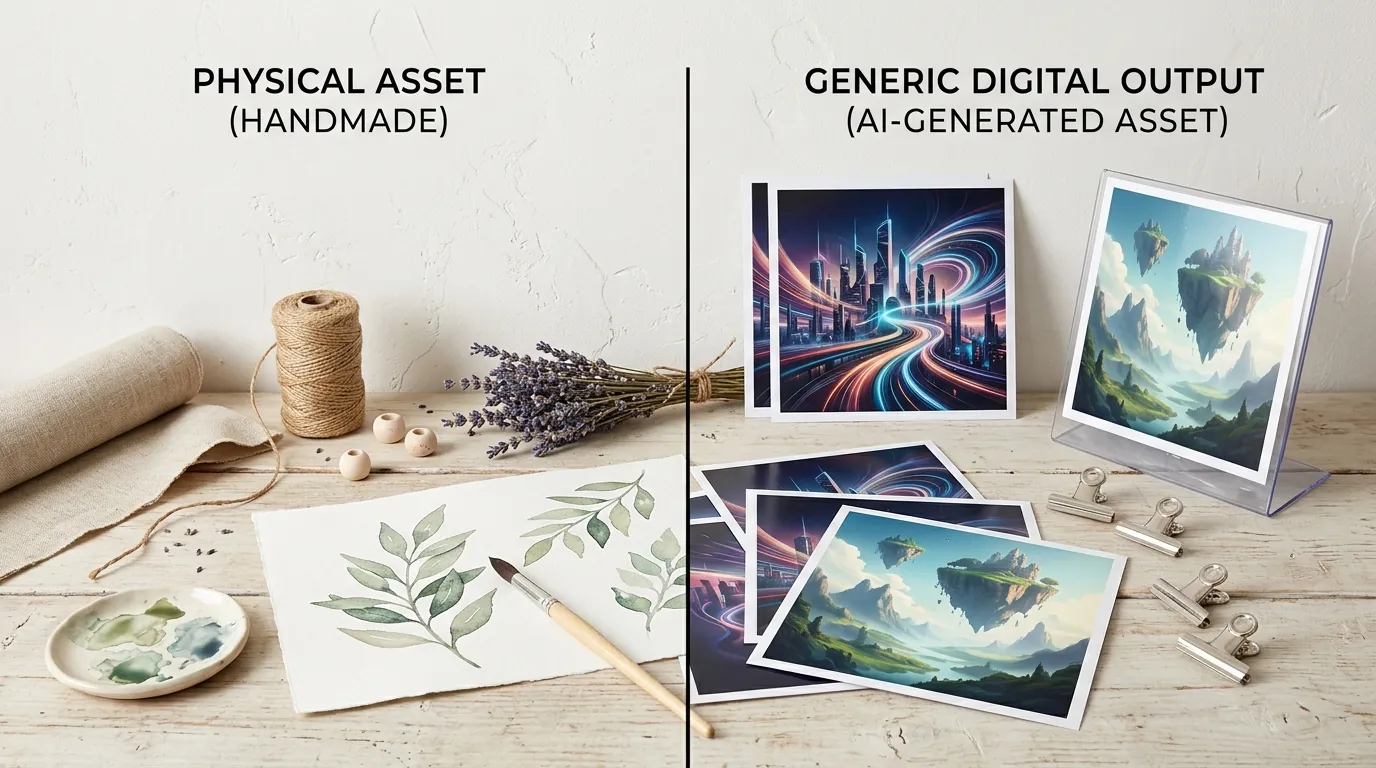
Your primary listing image (the “Hero Image”) is the most strictly regulated asset in your shop. According to Etsy’s Listing Image Requirements, the first image must feature a finished, customized item. If you are selling a physical product, such as a handmade mug or a screen-printed shirt, the first image cannot be an AI-generated mockup. It must be a photograph of the actual item you have produced.
Computer-generated mockups are only permitted in the secondary image slots (images 2 through 10). This ensures that the buyer sees the real-world quality, texture, and color of the product before they see a stylized AI representation. For digital sellers, this means your first image should be a clear representation of the file the customer will receive, not a lifestyle mockup of that file in a room that doesn’t exist.
The 2026 AI Human Model Law
As of June 9, 2026, sellers must comply with new regulations regarding “synthetic performers.” If you use AI-generated humans in your lifestyle mockups—whether they are wearing your jewelry or holding your products—you are legally required to include a clear disclosure badge on the image itself.
This disclosure, such as “AI model used” or “Digitally generated person,” must be legible and placed in a position that is not obscured by Etsy’s UI elements. This law aims to prevent consumer deception regarding human appearance and product fit. If you use tools like Photoroom’s Pro tier at $12.99/mo to swap models or Pebblely’s $19/mo plan to generate lifestyle scenes, you must manually add these text overlays to remain compliant with both state law and Etsy’s updated safety guidelines.
Common Rejection Reasons
💡 Skip the manual editing. PixelMatch batch-generates ecommerce-ready product images in 60 seconds — white background, lifestyle scenes, and variant mockups from a single source photo. Try PixelMatch free →
Search your Shop Manager for the word “Prompt” and delete any listings offering Midjourney or DALL-E prompt bundles immediately. Etsy has explicitly banned the sale of prompt bundles, as they do not meet the criteria for a “finished” creative work or a “craft supply” under the Creativity Standards.
- Missing Disclosure: Many sellers forget to mention AI usage in the listing description. Etsy’s automated text analysis tools flag descriptions that describe “brushwork” or “lighting” in ways that conflict with AI-typical metadata, leading to “Search Placement Downgrades.”
- Selling Prompt Bundles: This is a “one-strike” violation for many shops. Selling a PDF of prompts is viewed as selling a “method” rather than a “product,” which violates Etsy’s marketplace rules.
- Fake Hero Images: Using an AI-generated mockup as the primary image is the most common reason for listing deactivation. If a customer reports that the physical item looks significantly different from the AI-rendered first image, Etsy often sides with the buyer and may issue a “Not as Described” strike against your shop.
- Mis-categorization: Listing AI-generated digital art under “Photography” is considered deceptive. Photography on Etsy implies the use of a camera and a physical subject. AI art must stay in the “Digital” or “Art & Collectibles” categories.
- Undisclosed AI Models: With the 2026 synthetic performer law in effect, failing to badge AI-generated people in your secondary images makes you a target for legal complaints and platform-wide audits.
How to Fix Each Issue
Switch your background generation workflow to PixelMatch to ensure your hero images remain 100% compliant while still looking professional. Unlike tools that generate the entire image from scratch, PixelMatch allows you to upload a real photo of your physical product and only replaces the background. This keeps the “subject” of the photo real—satisfying the hero image rule—while giving you the high-end lifestyle aesthetic of an AI-generated scene.
Updating Your Disclosures
Navigate to your “Active Listings” and use the bulk edit tool to add a standardized AI disclosure. A compliant disclosure should look like this:
“Created with AI assistance: The base of this artwork was generated using [Tool Name] and then digitally painted and color-corrected by our studio to ensure high-quality print results.”
By placing this in the first few lines of your description, you satisfy Etsy’s transparency requirements and build trust with your customers. Transparency often leads to higher conversion rates among the “conscious consumer” demographic that frequents Etsy.
Fixing Listing Images with PixelMatch
If your shop currently relies on generic AI mockups for hero images, follow this three-step correction plan:
- Photograph the Physical Product: Take a high-resolution photo of your finished item on a plain white background. Ensure the image is at least 2000px on the shortest side for optimal zoom capability.
- Batch Process with PixelMatch: Upload your real product photos to PixelMatch. Use the background generation feature to place your real product into various lifestyle settings (e.g., a wooden table, a sunny windowsill).
- Reorder Your Gallery: Set the PixelMatch-enhanced photo of your real product as the Hero Image. Move any fully AI-generated mockups (like those featuring synthetic models) to the third or fourth slot, and ensure they have the “AI model used” badge.
Recategorize Listings
Check your “Category” settings for every AI-generated listing. If you see “Photography,” change it immediately.
- For Digital Art: Home & Living > Art & Collectibles > Prints > Digital Prints.
- For AI-Generated Textures: Craft Supplies & Tools > Canvas & Surfaces > Paper > Digital Paper.
Official Source Links
Verify these policies directly on the official platform pages to ensure your shop stays ahead of future algorithm updates.
- Etsy’s Creativity Standards (Official Legal Document)
- Etsy’s Listing Image Requirements and Prohibitions
- Etsy Help: What is Etsy’s stance on AI creations?
- New York State Assembly Bill A8887B (Synthetic Performer Disclosure)
Frequently Asked Questions
Can I use AI to enhance my product photos on Etsy?
Yes, you can use AI to enhance backgrounds, adjust lighting, or remove imperfections from your product photos. However, you must not use AI to change the physical characteristics of the product itself (like color or texture) if it misleads the buyer about what they will receive. Using PixelMatch to generate a professional background for a real product photo is a standard and safe practice under the 2026 Creativity Standards.
Do I need to disclose AI if I only used it for the background?
As of 2026, if the product itself is real and photographed, you generally do not need a prominent text disclosure in the description for just the background. However, if the background includes “synthetic humans” or AI-generated models, you must include a disclosure badge on the image to comply with New York’s AI disclosure law and similar emerging regulations.
Is Midjourney art allowed on Etsy?
Yes, artwork generated by Midjourney is allowed as long as it is sold as a finished product (like a digital download or a physical print) and is disclosed as “Designed by a seller.” You cannot sell the prompts used to create the art, as AI prompt bundles are strictly prohibited on the marketplace.
What happens if I don’t disclose AI usage on my Etsy shop?
Failing to disclose AI usage can lead to several penalties, including your listings being removed from search results, the deactivation of specific listings, or the permanent suspension of your shop. Etsy uses automated tools to detect AI-generated content, and they rely on buyer reports to identify shops that are not being transparent about their creative process.
Ready to scale your listings?
PixelMatch generates white-background, lifestyle, and variant mockups from a single source photo — built specifically for multi-platform ecommerce sellers. 50 free images on signup, no credit card.
Start free →
Sources
- https://www.etsy.com/legal/creativity
- https://www.etsy.com/legal/policy/listing-image-requirements/253962679005
- https://help.etsy.com/hc/en-us/articles/16666696670871-What-is-Etsy-s-stance-on-AI-creations-
- https://www.nysenate.gov/legislation/bills/2025/A8887/amendment/B
- https://www.photoroom.com/pricing
- https://pebblely.com/pricing/
- https://help.etsy.com/hc/en-us/articles/115015663347-Requirements-for-Listing-Photos